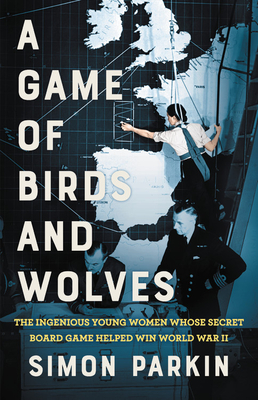
A Game of Birds and Wolves

E65316524BCA00ADF0D41D178A53AC4DBB6B292C.jpg

We will meet again, said 94 year old Queen Elizabeth in her rare but riveting message to the United Kingdom and in itself to the rest of the world. Only great and powerful events have compelled the monarch to address her nation. 80 years ago 14 year old Elizabeth and her sister Margaret addressed children everywhere in the famous radio broadcast October 13, 1940 – The Children’s Hour.

The Princesses faced a similar fate as other children during the German bombing attacks that were crippling the UK. The attacks were crippling to the British in that much needed supplies and commerce had been disrupted by German U-boats. The bombings were icing on the cake. In the case of the royal princesses they were not permitted to leave Britain due to a potential for kidnapping while abroad and therefore, as the now queen explained, went into sequestration for the rest of the war. Many British families had the same thought that to send their children overseas was the best way of protecting them from the horrors of war. But that solution was short-lived.

The broadcast signaled the need for Britons to step up and face their peril at home. The initiative to pack up and ship children and many mothers out of the UK to British commonwealth countries and the United States to ride out the war had come to a violent halt a mere month earlier. The sinking of the SS City of Benares by U-48 (commanded by Heinrich Bleichrodt) on September 17, 1940 less than 600 miles from the coast of Ireland killed most of the children onboard leaving 17 alive and about 75 adults whose escort warship had been diverted for another purpose. Whether one U-boat captain or another knew the City of Benares had civilian passengers that were mostly children is debated in this story. The Germans were reportedly unaware of the killing of the children (Unaware the passengers were mostly children) until reaching port, much to their collective shame and grief. The tragedy ended the program spearheaded by Children’s Overseas Reception Board (Corb). But there was still the problem of the German supremacy at sea that the British had to confront.

“Find out what is happening and sink the U-boats.” Winston Churchill

While this book was written to feature the zeal and patriotism of the women who volunteered to join the ranks of the Women’s Royal Naval Service (WRNS) and their assignment to the Western Approaches Tactical Unit, or WATU, it would be an incomplete history if we were to leave out Gilbert Roberts. Parkin gives Roberts the proper stage in which his heroic research and theories helped improve tactics in the Atlantic. Without his work the Royal Navy would have continued to face many tactical and strategic shortcomings. About half of this book is about Roberts and deservingly so.

Gilbert Roberts enjoyed a successful career as a naval tactician until he contracted tuberculosis – which nearly killed him – and the Navy put him out to pasture faster than a COBOL programmer. He struggled to get work after that (This was 1937) and took a stab at a constable job for a time. In the meantime Roberts continued making inquiries to the navy hoping to get back into service but always getting rejected. But one day late 1941 Roberts was summoned to Liverpool to head the effort against the U-boat attacks. Still, Roberts faced bias and discrimination at first due to his lower rank (He was medically retired as a Commander but picked up Captain later on) and also the fact that his team would comprise women (WRENS) and members of the royal navy who were no longer fit for full duty. Roberts knew his activation was basically temporary and not a return to full duty, one of many humiliations he continued to endure.
20526192-7643469-image-m-63_1572737158789.jpg
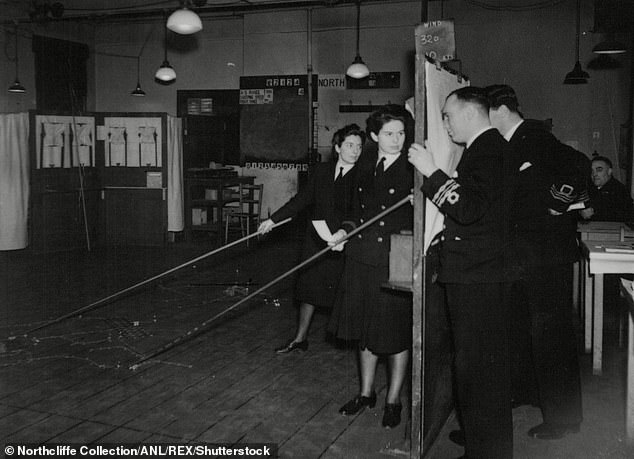
Sourced from DailyMail

The WRENS and Roberts were instrumental in the planning and running of war games designed to identify how the convoys were responding to U-boat attacks and how to implement countermeasures for reducing the rate of casualties. The WATU’s first battle study was of convoy HG.76, which involved U-434, 574 and 131 in December 1941. The games were played in various scenarios to produce different outcomes until the answer was revealed. The U-boats must have conducted their attacks by introducing a sub inside the convoy which launched the attack from within, only to go deep into the ocean and wait out until all was clear. This was confirmed and Roberts was able to prove his theory to the Admiralty. Officers would enter the great game room and from behind peep holes cut into canvas coverings – designed to mimic visibility at sea while each battle scenario was played out by the WRENS – would play the game by conducting maneuvers as they would at sea. The WRENS would advise on tactics and guide them in their decisions.

In contrast, the story of the WRENS is focused on their creation – or actually the activation of the organization since WWI – and their service under the leadership of Vera Laughton Mathews transitions from the excitement of patriotic service to the politics of forcing the Navy into accepting them as equals. Granted, their recruitment efforts glamorized the service, with couture uniforms (Designed by Edward Molyneux who later mentored Christian Dior) to the allure of breaking away from the norm and into the extraordinary. The importance of the work being done at WATU was even more palpable when on 19 August 1941, 22 hand-picked WRENS who were assigned to support operations in Gibraltar, 12 cypher officers, 10 wireless operators, and a nurse boarded the SS Aguila. Until that time, women were not allowed on regular naval ships and the only way to travel was via passenger liner just like any other civilian. A German U-boat torpedoed the ship hitting directly the berthing compartment (Living quarters) where the women would have been sleeping. One significant policy change stemming from this loss was to allow women on regular naval ships from that point on, perhaps a step closer to the integration of the women into the Navy.

At HQ those who were on duty that day knew what had happened but even after losing all the women in the attack, even more volunteered for this duty. Against the expected biases of the time the Royal Navy stepped up and accepted that the WRENS were a great asset to the Navy throughout the war. Their story is paced in this book, a small introduction early on then more about Roberts then back to the WRENS working the war room with emphasis on the women who put together the battle scenarios and ran the simulations. Like Janet Okell (Who named the main battle game Raspberry as a ‘razz’ to the Nazis) and Jean Laidlaw but there are brief and interesting since the women volunteered not just to work in the WATU but also as drivers, mechanics, and even cooks in addition to crypto and communications.

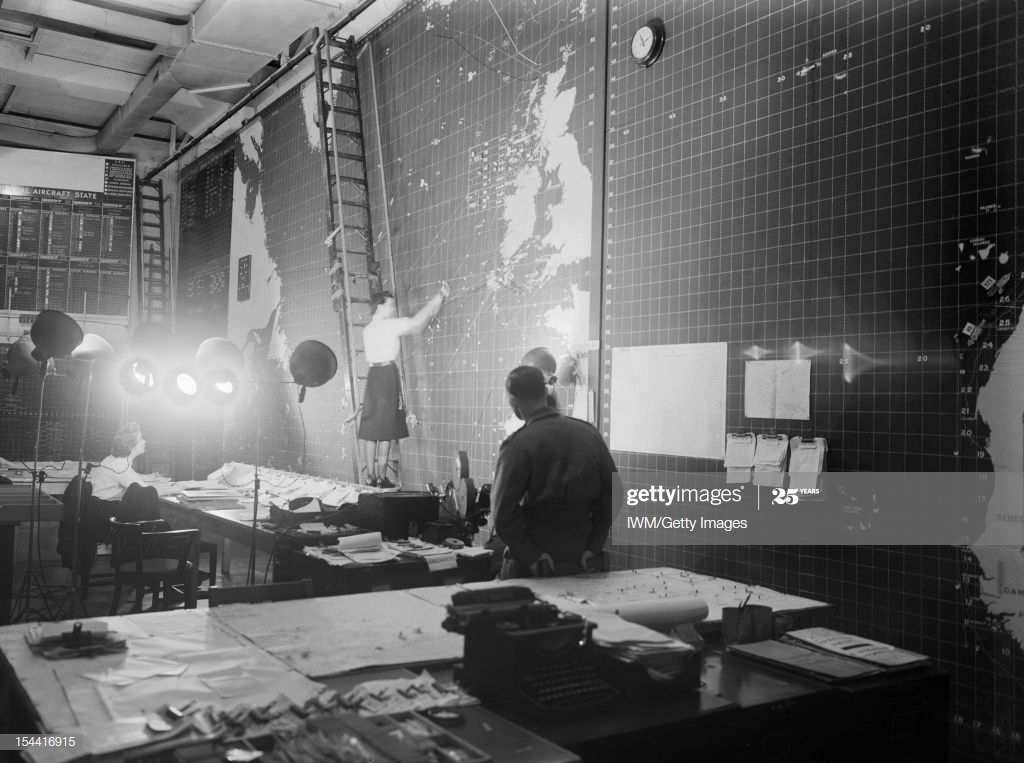
The already tense atmosphere inside the WATU game room was even rocked when one of the WRENS standing on a ladder performing plotting was killed. Another WREN grabbed the ladder and moved it in a hurry to another end of the giant plotting board causing the girl to fall to the hard floor. She later died of her injuries at a local hospital and her death not reported due to the secret nature of their work at WATU. Her death spearheaded the use of harnesses (Not pictured here but you can see it on the book’s cover). This was a high-stakes game as the German U-boats kept much needed food and other shipments from reaching the UK and Britons were on the verge of starvation. All their preparations were centered on one great battle that would finally flip the advantage to the Allies (By then the U.S. entered the war officially but had been assisting the UK by conducting convoy escorts in the Western Atlantic) May 1943.
gettyimages-154416915-1024x1024
The Royal Navy During The Second World War, In the operations room at Derby House, Liverpool, where up to the minute shipping positions are shown on a huge indicator, a Wren can be seen up a ladder making an alteration to an indicator on one of the large, wall mounted maps. This is one of the scenes for an Anglo-American official film covering the battle of the Atlantic right up to D-Day, being shot by Army Film Unit cameramen at the headquarters of the Commander in Chief Western Approaches, 26 September 1944. (Photo by Lt. C H Parnall/ Imperial War Museums via Getty Images)

The Wolves

“The sea war is the U-boat war. All has to be subordinated to this main goal.”

In an equally interesting parallel world to Gilbert Roberts’s strategic games, Admiral Karl Dönitz (Spelled phonetically Doenitz in the book) had dreamed of maritime supremacy since about the late 1930s as Roberts had left service. In the end the two men would face each other at war’s end but only one standing in the winner’s circle. Roberts would eventually be the man to interview the U-boat officers under Dönitz’s command, confirmed their tactics against his hypotheses and tour what was left of the U-boat fleet. Dönitz had also dreamed of building a massive submarine fleet but had competition from Grand Admiral Erich Raeder who campaigned hard to convince Hitler to approve ridiculous funding for the surface fleet while the air force Under Goering had significantly taken most of the funding.

Dönitz had been harping about wolf-pack tactics since 1937 but had a hard time selling the idea to his superiors. But he got his big break after Grand Admiral Raeder was admonished by Hitler (An unpleasant situation for anyone under his command) over a confusing report from a U-boat commander and after taking the abuse he tendered his resignation. This left the door open for Dönitz to ascend to the position and further helped him influence Hitler into investing in the U-boats.

Dönitz was not just a legendary WWI U-boat ace himself but father to boat commanders (Both died during the war) and mentor to other modern day boat commanders. Joachim Schepke aged 29 (U-100), Günther Prien aged 30 (U-47), and Otto Kretschmer (U-99), Germany’s highest scoring U-boat commander. Parkin moves fast without sacrificing details of how the three submariner rock stars waged a deadly tonnage war on Britain. Prien and Schepke perished at sea and Kretschmer was captured during the same battle that killed Prien. Kretschmer managed to save most of his crew and himself before scuttling U-99 in a daring move. He was captured by the British and spent six years in in POW camp in Canada and resumed his naval career once he returned to Germany. But their string of successes at sea ran into a wall in 1943 which is the battle mostly referenced in the book as well as Operation Raspberry.

The battle of the Atlantic was the longest running sea engagement (From 1939 until 1945) but until what is called Black May (29 April – 5 May). This was believed to be the turning point of the long battle even though both sides incurred high casualties. ONS 5 was one of the convoys headed from the UK to the United States and the WATU was instrumental in providing ship commanders guidance during the fight. While the WATU was conducting live tracking of the battle, they were faced with the problem of information flow. Since the Germans changed the Enigma codes frequently, the reality of the brutal fight delayed the details of the action until toward the end of the battle when actual torpedo hits were recorded. Black May (The Germans considered this week a catastrophic defeat leading to retreating from the Northern Atlantic. Four months after the great battle U.S. Admiral Ernest King downgraded the U-boats from menace to problem.

Parkin brings up the point that though instrumental in the defeat of Germany in the Atlantic the roles of Gilbert Roberts and the WRENS were not fully recognized in the end. Only high ranking officers in the Royal Navy were given the opportunity to write books or be interviewed about the success of WATU. Many of the WRENS did not document much of their service with some exceptions but some accounts are included in the book that details their training and some of the difficulties in gaining acceptance within the Navy. The final chapter is the author’s experience with war gaming that is an interesting read.

Trivia question for next week:

Karl Dönitz was a POW in WWI and was admitted to an insane asylum for a time. Was it insanity in captivity or a ploy to get out of serving time? Do some sleuthing online and find the answer and put it in the comments section. We can have a nice follow-up discussion. Happy reading!


A Game of Birds and Wolves Preview

I know it’s been some time since the last book review but life sure takes some strange turns, doesn’t it? If you have young ones at home needing some reading material to enrich their lives with don’t forget about Arcturus! Hoping to publish reviews on Mondays again so stay tuned. Also don’t forget I’m on Facebook if you don’t see my email notification of reviews yet. I drop a lot of historical content on my Facebook page to keep minds young and younger interested. I am posting the upcoming review trailer here from Facebook here for your enjoyment. This review will be published shortly.

America yours,
Arcturus

The Mercury 13 – The Untold Story of 13 American Women and the Dream of Space Flight by Martha Ackmann

This book has been out for some time but since I got a hold of some space program/Apollo 11 titles then followed by more aviation celebrations this summer, I am obliged to give a brief review of this fantastic story. The book is available in paperback or as an e-book which I enjoyed again while overseas. Great story. Not a long review but a follow-up on a previous post and wanted to draw some attention to women in aviation.

Valentina Vladimirovna Tereshkova was a factory worker who also took classes in her spare time (Possibly regular academic courses but she eventually would be awarded a degree in Technical Science from Zhuykosky Air Force Engineering Academy) took parachuting lessons. That was her main qualification. The other five Soviet female’s names are pretty much lost in the historical noise as the U.S. vs Soviet cat fight for space supremacy almost put a qualified female in space fizzled just as quickly as the bubbles rose to the edge of the glass. The Soviet leadership really wanted to pelt the U.S. with rotten eggs they would claim they could do anything. The U.S. in turn, seemed to be either genuinely interested in putting a woman in space just the same but things didn’t work out or they played the Soviets into taking the leap big time.

You be the judge. Just like I mentioned in my review of Shoot for the Moon, Tereshkova did indeed make the 48 orbits but spent the entire flight tossing her cookies and was barely functional at the time until she landed, then she felt better. Don’t we all. She never flew another mission nor did the Soviets launch any more females into space for many years. It was all a dare of sorts. The recent non-controversy during the celebration of the 50th anniversary of the Apollo 11 mission that the Soviets were really the ones who spearheaded female flights is bunk. Not a single Soviet female could measure up to the American female aviators who were trailblazers in the field. But our lady aviators all got their start somewhere and shows that the spirit of adventure could trump having to juggle family life and still remain women in a man’s game. Sadly this game advanced too quickly and put the American women on the spot with a glimmer of hope they would someday soon be in space. While that did not happen right away, rest assured, the U.S. had the right stuff.

Bird of Paradise Motel

The epic fight between Jerrie Cobb and Jackie Cochran for leadership of the Mercury 13, or at least the yet to be named group of women aviators who had been summoned in a race to be tested by Randy Lovelace was escalating. The scene must have been reminiscent to that of It’s a Mad Mad Mad World. The rivalries and jockeying for position among the women were healthy enough – after all, these women were the cream of the crop of female pilots and deserving of praise and admiration in their own right – soon began to manifest. And that crappy motel was a great backdrop compared with Cochran’s lavish ranch (Where she had entertained many of the ladies before undergoing their tests) as the women candidates were called one by one to come out and take the astronaut battery tests.

https://www.dailymail.co.uk/news/article-5638809/Mercury-13-female-pilots-trained-space-flight-1960s-outdid-men.html

Original Caption: “Miss Jacqueline Cochran, Director of WASP.” Credit: Image Number 4A-23096-K1210, Record Group 342, National Archives and Records Administration at College Park, College Park, Maryland – Photograph credit National Air and Space Museum

The women undergoing the testing had not been forced into any secret agreements as is often believed. In fact, the testing program was well-known by the media and the public. The fact that Cochran had gone against it in the first place – some thinking perhaps had she been in the running for the space program her attitude would have been different – helped get the program funding scrapped at the final stage. The women endured the tests with great aplomb and were thrust into the limelight, still required to be women, be glamorous, and skilled pilots. The idea of the program was both for and against them from the beginning and the main detractors were some of the NASA pilots including John Glenn. The space program would not be a reality for several more years, but became a reality with Sally Ride. And her trailblazing journey where many more outstanding American women – all professionals and fully qualified to participate – beat hands down the Soviet propaganda machine.

Not to put down Valentina Tereshkova’s cookie-tossing 38 orbit nightmare – her first and last journey into space – as a stunt created by desperate men bent on beating other desperate men across the ocean. But women’s moment did come and it was big.

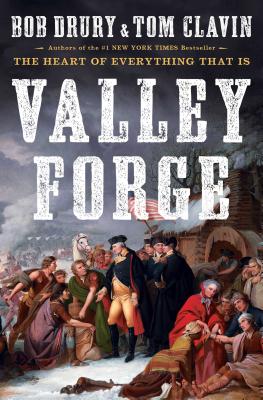
The Heart of Everything that is VALLEY FORGE – by Bob Drury and Tom Clavin

Despite the day’s misfortune, I am pleased to announce that most of my men are in good spirits and still have the courage to fight the enemy another day“.

The battle at Brandywine on September 11 1777, the longest battle fought in our revolutionary war (in a single, about 11 hours) and the decisive blow dealt to the Continental Army and ultimately losing Philadelphia, the then capital of the American capital, . More troops fought in this battle than in any other military engagement in the war. Washington made a crucial error by leaving his right flank open which General Howe’s army quickly took advantage and led the attack. It was fortunate the British didn’t have cavalry support and gave the Americans the break they needed to slip out of reach like a cat squeezing through a narrow space. Other nasty encounters would take place after that such as Battle of Paoli Tavern or the Paoli Massacre though casualties by comparison were really small, the rumors or stories that the British had massacred Americans trying to surrender by charging with bayonets and offering no quarter attributed for the notoriety of this battle.

By September 26 Philadelphia would fall, and the defeat meant Washington would have to select a proper site for his next camp where the landscape offered sufficient cover from the enemy as well as a higher point of observation. The perfect spot was Valley of the forges or Valley Forge, the seat of the American steel production much coveted by the British. The book showcases Washington’s rise as field commander and his relationship with his officers to include Alexander Hamilton, John Laurens, and the Marquis de Lafayette. The petty dramas working behind the scenes by Washington’s haters (Seriously, still hating this guy for being the tallest in the room and getting the job of Commander in Chief). Washington didn’t have it easy as we all know, but one point is driven early on in this story in that a common misconception is that Washington had a sizable army. The reality was that he was always begging for supplies and equipment and having to manage large numbers of people dressed in rags in the dead of winter.

And what a winter. By February 1778 the logistics of getting supplies delivered by contractors became a dangerous endeavor. While many farmers got through the heavy snow-covered countryside to the winter camp and made their deliveries, they were stranded with no shelter themselves. Some would not reach the camp and were forced to abandon their cargoes and fled home. Horses died on the spot, abandoned by their riders. Snow melted and flooded roads and the camp then snow came at them again with a deep freeze this time. Christmas was bad. So were public relations with the locals as farms were plundered clean and January was no better. Paranoia-fueled mutinies or other acts of violence were feared.

“The love of freedom is controlled by hunger.”

Washington was forced to not practice ‘hearts and minds’ and issued orders to seize food and supplies and intercept and punish anyone supplying the enemy. Food search parties reached as far as New Jersey with hundreds of men and the search was also encumbered by the locals learning to hide their livestock and other foodstuff soon as they got wind that militiamen were coming. Doubts that the war for independence would really take hold. Washington juggled the winter famine, desertions, and the infighting and squabbling over promotions within his officer corps with what a French officer stationed at Valley Forge as his ‘imposing countenance’. Valley Forge may have been a cold death trap for the Continental Army – such as it was – but such hardships bore a stronger esprit de corps in the officers and strengthened the will of his men. Eventually the Continental Congress was close enough to tour the camps and see what their indecision and inaction had created. In spite of all the obstacles faced by the Continentals, in a few months they would prove their worth at the battle of Monmouth Courthouse.

The valley of forges had indeed forged them all into the fighting force it was meant to be. Rags and all.

Drury and Clavin take us on a journey of great hardships and even greater feats of heroism and patriotism. It is a great start to the fall season reading.

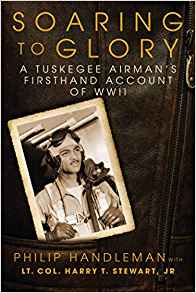
Soaring To Glory by Philip Handleman

“I will not falter, And I will not fail”
When Harry Stewart bailed out of his aircraft during a terrible storm while on a squadron run after WWII he wondered if he would survive parachuting into what was basically hillbilly territory. But the injured pilot was spotted by a local man’s daughter as it descended onto the countryside and soon the father and a teen-aged son headed out in his truck with some tools and supplies to see what he could do for the pilot.

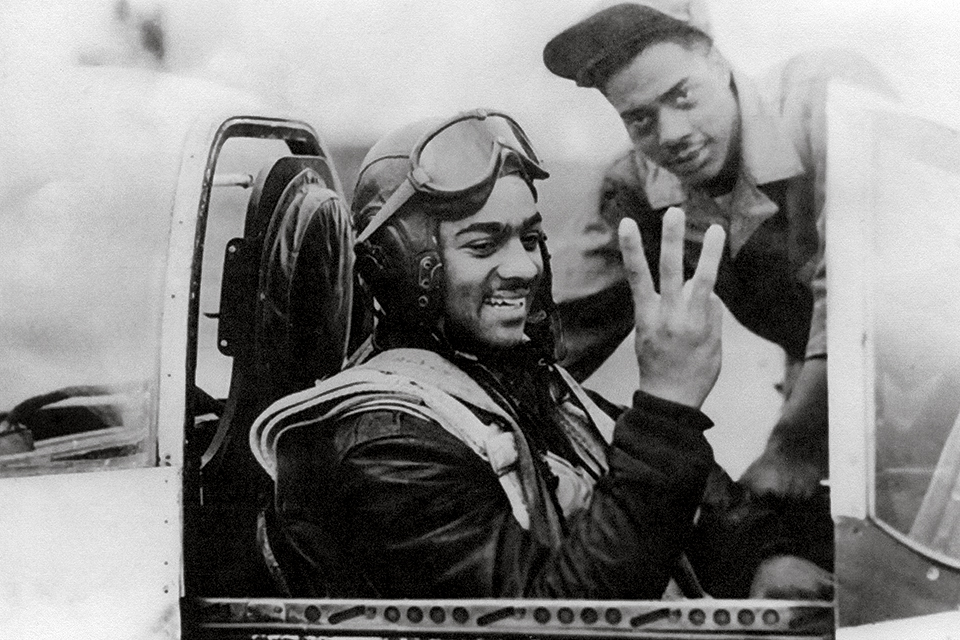
Harry T. Stewart celebrates his “hat trick.” (Courtesy of Lt. Col. Harry T. Stewart) – (Photo credit Historynet.com)

The white man and his son stared in disbelief at the black man dressed in Air Force jump suit leaning on a tree trunk with a large wound on his leg. The boy had never seen a black man until then but he and his father tended to the pilot’s wound and after dressing it up they loaded Harry on the truck and headed home. The man’s wife did not hesitate to help dress Harry’s leg wound and the family even offered him some of their moonshine to help him with the pain. Harry was not stranger to facing grave perils and obstacles in his life but this
Harry Stewart, who by the end of WWII had been awarded the Distinguished Flying Cross and the Air Medal with six Oak Leaf Clusters, was downsized out of the Air Force with many other pilots. The recently married young man who dreamed of flying as a little boy growing up in Queens, New York found himself doing the unemployment shuffle like many war veterans across generations. Yes, even to the VA rep at the employment office his wartime heroics were no better than the wartime heroics of other vets looking for employment. Handleman delivers a poignant reality for veterans once they return home and want to pursue their dreams only to be met by some for of bureaucracy.
Downsized after WWII 43 combat air missions. The VA guy asked what Harry could do. It’s manual labor for him like the other men in New York with no High School diploma, a decision that deeply affected him even in the beginning. He almost didn’t get into the Air Corps because he followed the lead of his buddies in school and sought instead to gain employment around the military installations. He tried to enlist early on in 1941 but being 17 the recruiters laughed and told him to come back. So Harry waited until turning 18 to try his luck and took the aptitude test for the Air Corps and failed it. Determined to have his way he studied hard and re-tested and passed. Then he just had to wait for the War Department to tell him if he was in or not.

Men without formal or advanced education had a beeline to the infantry. Thankfully, just two days before Harry’s father suggested that Harry report to the draft board with a letter from the War Department that he had been accepted into the Air Corps program for the 99th Pursuit Squadron. But then what would he do? He had a letter from the Air Corps that he had to report for training and a draft notice. For once the young man thought his father would have some solution to his dilemma and he was correct.

His father told him to report to his draft board appointment and that at the appropriate time hand the letter from the Air Corps and see what happened. Father was spot on. Handleman’s narrative of Harry’s actions during the war is peppered with side anecdotes on his childhood friends, the breach of the race barrier in combat conditions, and the struggles of the black aviation program that were taking place behind the lines. His experience as a shy young man from Queens (Born in Virginia but raised in NY when his father moved the family there when he was two) in overcoming physical problems stemming from a bout of polio as a child and his discovery of the realities of race relations outside his childhood neighborhood are specially endearing. Harry grew up in an ethnically diverse part of Queens and was not exposed to the outside world that much. To him someday flying would have no color considerations.

War Hero is an unemployed war hero

After the war no black pilots would be allowed to fly commercial not matter how accomplished. Harry tested the system just the same, unable to reconcile the disparity between the newly-integrated Air Force and the still desegregated commercial airlines
Harry had trouble with the idea of doing manual labor due to his lacking a high school diploma at the very least. After being turned down by TWA and Pan Am, Harry broke down and asked his uncle for help. Harry had secured a spot at NYU and was attending night school while he worked during the day but his dream of flying never left him.

Thankfully his uncle’s introduction to a Harlem politician and a letter of introduction gave Harry the chance he needed. He found himself working in the city’s engineering department where he learned the trade and got promoted to junior engineer, Harry stopped going to NYU and with more guidance he instead enrolled in community college where he regained his academic focus before returning to NYU.

He earned a degree in mechanical engineering but flying then had to take a back seat in spite of him doing some flight instruction on the side. Harry’s degree in engineering opened doors by the time he completed his studies in 1963 and followed by a series of commercial engineering jobs until he landed a spot with Bechtel Corporation where he excelled in his new career and found it to be most profitable. The author lavishes praise to the retired aviator for his kindness and humility and this is a great story of triumph over adversity.

The book outlines the nascent black aviation movement and the fight to integrate the armed forces prior to WWII and also the struggles of the black pilots within the program to attain the same status as their white counterparts. I wanted to wrap up the national aviation celebration (Actually that was on the 19th) and all things aviation with this review. I’ve got two honorary mentions coming up in the next review that are not new books but worth a read if you’re into aviation. I’ve been overseas for work and fallen behind on writing. Such is life. It’s good that I can still read. Get this book. Harry Stewart is now 95 and making book signing rounds. Amazing man.

Shoot for the Moon: The Space Race and the Extraordinary Voyage of Apollo 11 – By James Donovan

Fifty years ago…

So it’s the 50th anniversary of the greatest stunt pulled by man, American men for that matter, and everyone is trying to figure out where Buzz Aldrin went. He didn’t show up to the scheduled festivities and failed to join his remaining team mate Michael Collins, leaving him to deal with the adoring masses. “I’m alone here!” How strange and hilarious. Aldrin is a media hog extraordinaire and if you look at his Twitter feed you’ll see why he wasn’t in Florida in his old stomping grounds. Men like Aldrin and even Collins (Who was probably just as happy staying home) and many of the other men in the space program are about experiencing the moment. Boy does Aldrin enjoy it! Collins was the guy in the getaway capsule and orbited the moon while the great Neil Armstrong – who sadly joined the stars in the heavens – and Aldrin were on the surface collecting moon rock samples and becoming icons. It seems that Collins was fine with being kind of forgotten until Armstrong died then he’s got to do the meet and greets now. But anyway, one point to make is that the three men may have not been buddies from the service and all that like some of their counterparts but they worked together to make their extraordinary feat possible. They were amiable strangers. Three men who pulled together for a common goal and came out triumphant. But the road leading to this moment in time was paved with strife, adventure, including deaths, and courage.

If you weren’t a kid watching on TV fifty years ago as this mission developed I feel bad for you. I’m not trying to insult you, just making a point that this was as big a moment in man’s history on earth as it gets and some of us got to see it live. I guess you’ll have to watch films and read books to get the feel for that part of the 20th century. The videos are just amazing and highly recommended. I sure am glad I was alive then and remember the event clearly. But speaking of the Apollo 11 mission, there are several books out right now but there’s one that stands out. I have been milking this one for some time and felt that at least I could get a short review out since this is indeed the anniversary week of the moon landing.

One thing that generations after the space flight missed were the many other space missions building up to putting these three amazing men into the moon’s orbit and placing two of them on the dusty surface. So the moon landing was not an isolated event. Of course the many space rocket launches televised were fun at first but the broadcasts would often interrupt live programing and this really got on people’s nerves. After the public grew weary of the interminable Gemini missions – the building blocks to construct the moon landing – and many programs because hey, we know NASA can launch rockets into space, enough already. So the expectation from the public was mainly just put men on the moon before the Soviets do. Donovan’s book takes us along on this magnificent tale of man seeking greatness at any cost and facing terrible odds to achieve it.

The space age got off to a terrifying start actually. While the Allies from WWII had dabbled into long-range missile technology, the Germans had cornered the field hands down. Had the British (Churchill’s order) not sunk a particular ship carrying rocket components the world would have experienced the threat of nuclear war for sure. But this didn’t stop the Germans from pummeling the Brits. Enter the V-2 rocket, destroyer of cities and people and capable of carrying a nuclear war head. the 1950s and the ensuing Cold War. The space race was a major pissing contest between the Soviets and the United States and everyone in between wanting in the reindeer games but without enough credentials or prestige. And boy was this race about prestige but in the pursuit of bragging rights over who’s rocket was bigger and traveled farthest the race was truly mankind’s awakening to bigger and most amazing things. Nazi Germany was dangerously ahead of the game of guided missile technology it wasn’t funny and the initial race to grab as much scientific talent from the Germans after their defeat by the Allies set the pace of the build up. They were so close all that was needed was the marriage of the V-2 with the A10 to become the first ICBM. But that technology went to the U.S. and the Soviets after the war. Then the race for space was on but while the Soviets got a hold of V-2s just like the Americans did and dug deep into this technology, the Americans held a strong belief that acquiring the scientific minds who designed these rockets as the best way to get ahead of the game. This would prove to be correct in many ways.

But nothing says hurry up and get going that big public blunders, and the Americans were too naive and eager to show the Soviets of their rocket launches. In the meantime the Soviets made sure to only publicize successes and not every devastating failure experienced. No wonder the pressure was on. The U.S. went out of its way to match and exceed its opponent. Had we known then what we know now about the smoke and mirrors game played by the Soviets things would have been different. Anyway, in the beginning the space program was more the guided missile program and our ability to put out some really powerful and far reaching rockets to counter the Soviet threat. That this threat extended to the close scrutiny of the American public and the same public demanded we catch up to the Soviets.

Take the Vanguard ‘launch’ December 6, 1957.
https://imgur.com/rgNK0ni

The rocket barely lifted a few feet off the platform before crashing into a terrifyingly glorious fireball and totally delivering the US’s honor on a platter. The Soviets were quick to hand the US its ass with public invitation to apply for a Soviet program for technology assistance program for underdeveloped countries. National Advisory Committee for Aeronautics NACA (Originally they did nothing more than Research and Development) was tapped as the new face of the U.S. space program but since they had no practical or production experience, it would merge with NASA to become the agency we know today.

The selection process for the new position of orbiting around the earth was at first tantamount to the reject pile from American Idol. The list of potential candidates included midgets and even women and folks from dangerous and strange professions. Eventually Eisenhower, concerned that the US would look even more foolish, decided the astronaut candidates would come strictly from American test pilots. Since they were all male that eliminated females and since they were mostly military – in spite of the fact that he really didn’t want to grow the military industrial complex – were more suited for the job and eliminated the hassle of having to get them cleared (They already had security clearances since some were active military and others were former military pilots). Women pilots were also selected and trained at some point in the program but never allowed to fly versus the Soviet’s launching of Valentina Tereshkova onboard the Vostok 6 which orbited the earth 48 times which is over two days. Over two days of throwing up and not being functional, but counted as the first female in space. Not that she had a choice as being picked from a factory line up to lead the propaganda. But an accomplishment nonetheless because she went on to marry and have children and that turned out alright. There were no noticeable side effects to her but after her 1963 flight the Soviets did not send another woman into space for over a decade. Which pretty much coincides with American women going into space 15 plus years after the men got there. Ultimately, the best candidates for the program were military pilots and mostly test pilots (Just like Neil Armstrong) and once you read this book on how each flight mission was tested ad nauseam you’ll understand why NASA excluded women. Enough of that, I’ll save the rest for my next review.

A new age of flight

So what would the spacecraft look like? Amazing that the men who worked on the capsule design got their ideas from nature, in particular meteor shapes which helped them survive entry into the Earth’s atmosphere. Their concern being prevention of the capsule’s burning up on reentry. As the quest to establish supremacy of space, there were many questions cropping up every step of the way. The space race started with the Soviets launching small satellites and put them into orbit to sending animals into space then people for short orbital missions then what? The more they achieved the more each side wanted. The Soviets would appear to be way ahead of the game and the Americans frantically working to gain traction and also prestige. Exit Eisenhower, enter John F. Kennedy. The space exploration thing would soon gain popularity with the White House. Eisenhower’s problem was two-fold; he was trying to balance the budget (Who else does that anymore?) and also the so-called missile gap (Which actually did not exist) and he was content with the development of larger and more powerful missiles. He did not have much of a support for space exploration. But opposition from the Democrats made it hard for him to say no to funding these early projects. His idea of prestige was to have a balanced budget and enough far reaching missiles to keep Nikita at bay. The opposition made sure to hype space defense as mitigation from the Soviet threat.

Eisenhower spearheaded a lot of initiatives to help build up national prestige through education. National Defense Education Act was designed to encourage a push for education to counter the Soviet’s approach to education as they often boasted their children were supposed to be ahead in math and science. The Act allowed for the creation of grants and low-interest loans to get young people into these fields.

When JFK entered the scene he put even more pressure to build and grow the program and issued a great speech outlining the future of space flights. The ten year mark was hey, no pressure boys. But it was. We have to consider Kennedy had real world problems such as the Cuban missile crisis but worst yet the fiasco of the Bay of Pigs invasion was a big glop of egg on the American face. So a space program and the possibility of reaching and landing men on the moon would be the big payback to Soviet boasting. The race then faced many obstacles, but the biggest issue was safety. Not only were the space flights dangerous but adding time in orbit generated other questions. Flights were short at first but what about going to the bathroom? How about eating? Do the astronauts need to sit or just stand and hold on to tethers because of zero gravity?

Would speeding up construction of the space capsules pose safety issues?

The Apollo 204 test resulted in the first actual program related death. Not counting pilots getting killed in normal flight ops and other incidents but the 204 fire not only took out what was left of the original Mercury 7 team but shut down the program. The fire had the horrific potential of taking out whole crews and support personnel and technicians and it was a sad blessing that it was contained within the test capsule. Working in a pure oxygen environment (Not the first time this was done) Gus Grissom, Ed White and Roger Chaffee were unable to extinguish the fire caused by an electrical cable under one of the seats which set off a spark. No fire extinguishers onboard or the emergency hatch mechanism that were installed in the main capsule. This was a test day. Safety and shoddy work from contractors under pressure to produce results quickly. After the investigation and report there was also the issue of the public no longer that interested in space missions. The focus was then more for Vietnam, social and economic concerns like in any other generation. Life was getting on. So was the Soviet Union. They had their problems too but again, they worked in the fog and only emerged in public long enough to announce yet another trimphant event. The question of working with pure oxygen environments were also a challange to them but this fact was not to be revealed until many years later.

“We do not intend to speed up our program. Excessive haste leads to fatal accidents, as in the case of the three American astronauts in January.”

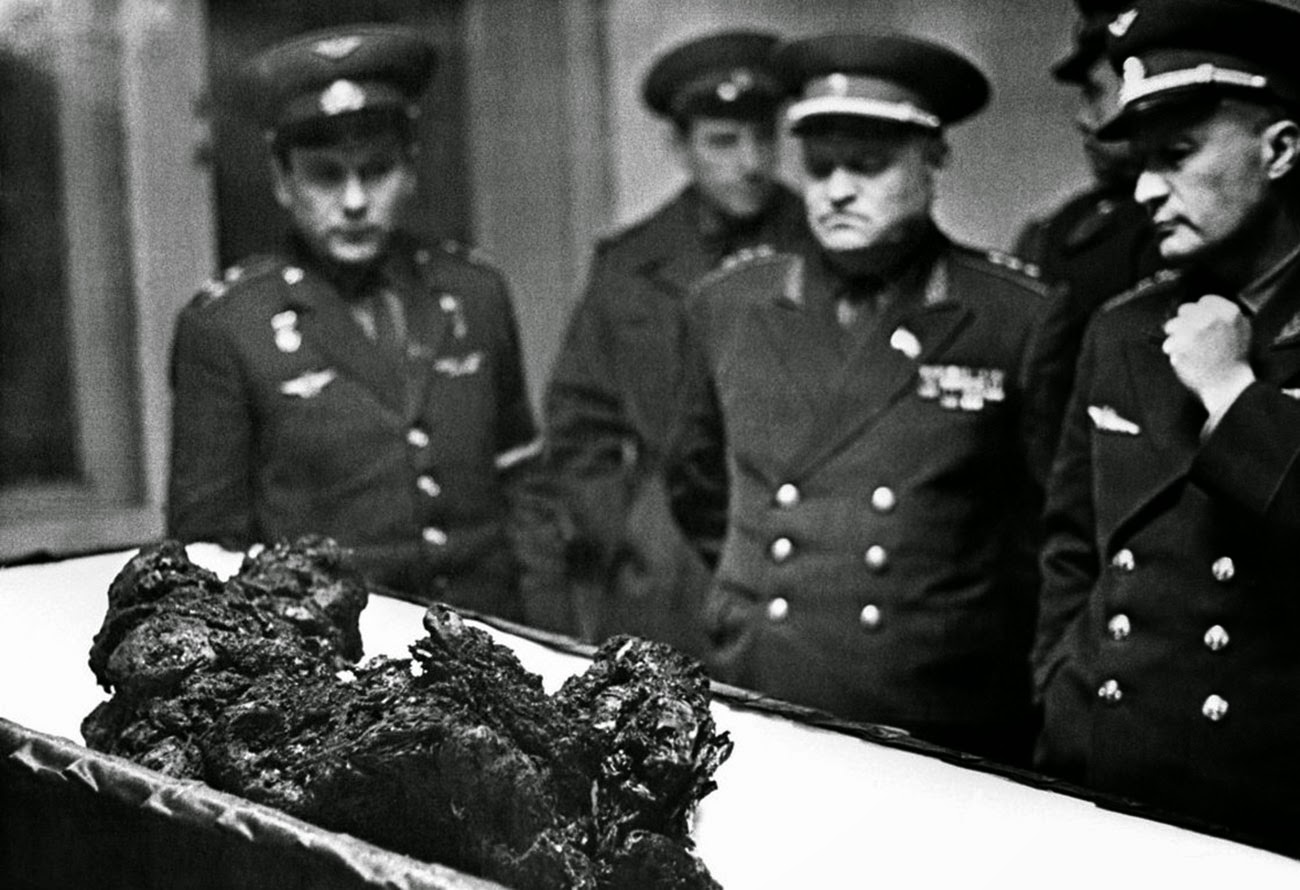
Ouch. By April 23, 1967 the Soviets were ready to launch Soyuz 1 and it would be magnificent. To send a space crew to dock into a station, make the cosmonaut transfer then bring their guy home. That guy was Vladimir Komarov, who was the primary for the Soyuz 1 and his dear friend and national treasure Yuri Gagarin as his backup. Their mission was doomed beyond hope though. Takeoff went well but things went downhill from there after the craft was out of control and had to be manually corrected by the pilot. He managed to turn things around and while Komarov survived reentry, the parachute system failed, crashing to earth into a fiery mess that left a portion of the craft at the site and a fragment of a heel bone.

Komarov knew as well as all other pilots that the test should have been delayed but wasn’t. And to refuse to go would mean Gagarin would have to step in for him so he made peace with what would be his last flight. He made it known his wish to have an open casket funeral just to throw it back at the leadership. Three Americans and one Russian down.

Komarov after the crash. He was once a handsome fellow.

The countdown to the Apollo 11 launch, the excitement of people gathering to watch the event, the tension at Mission Control, and the carefully choreographed landing of the Eagle will send shivers down your spine and make you at least mumble ‘MURICA to yourselves. This book is a keeper and great addition to any library.

PS- Just saw Mike Collins and Buzz Aldrin and Neil Armstrong’s sons meeting in the Oval Office with the president, so all is well.

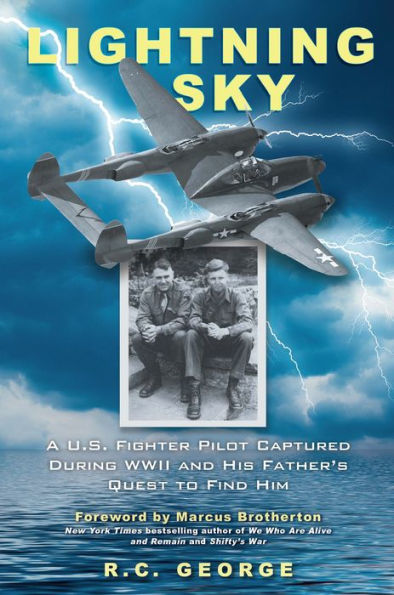
Lightning Sky: A U.S. Fighter Pilot Captured during WWII and His Father’s Quest to Find Him by R.C. George, Marcus Brotherton

Here’s another example of fatherly love for the ages. This is a pretty straight forward story; a nineteen-year old pilot is shot down while conducting a strafing mission over Crete and captured by the Nazis and sent to several concentration camps during WWII and his father, an Army Chaplain also deployed to Europe to fight in the war who went on a quest to find his son. But this story is seriously underrated in that so much more could have been covered in this book. However the story pulls at both heart strings and the adventure/thrill-seeker in all of us. The subject of the book is David MacArthur, an Army pilot who served in three wars after surviving the perils of being a POW, his witnessing of the holocaust and the exhilaration of being liberated in one of the most notorious Nazi camps.

But then the story may also be about the father.

Vaughn Hartley MacArthur was in his early forties and had served as an Army Chaplain for many years in addition to his practice as a civilian pastor. When opportunity dried up for him on the outside, the Army offered a great career path. Curiously enough, Dave’s dad pulled some strings to get him out of an infantry ROTC program he signed up for (He didn’t get his pick) after Dave insisted he wanted to be a pilot. Somehow Dad made it happen and Dave was on his way to The opening of the book takes the reader on a wild ride with young Dave, now serving in the Korean conflict.

Dave’s service in Korea in 1951 as a Forward Air Controller and leading ROK troops against Communist Chinese troops. His antics and heroism are hard to explain without writing the whole chapter, but conveys the fact that Dave was not about to be captured by the Chinese. He was just not going to be a POW again, driving him to desperate measures to repel an attack from Communist forces. So in a way he ended up acting as an infantry officer on the ground after all until his reassignment. He was awarded the Distinguished Service Cross. But that wouldn’t happen for a few years. The theme of the book is about his capture and survival and this the author does well in his descriptive narrative of life and death in Nazi captivity.

So young Dave got his wish and was signed up as a pilot and the chapters dedicated to flight training open a window into great adventure and hardship and death. Training was just as perilous as the combat the men would face. Vaughn was asked to give the prayer at the Eagle Pass graduation in 1944 where Dave got his wings and his speech is a very sobering one addressing the perils that awaited them. No one knew just how close the war was nearing its end.

The graduation was just as Eisenhower was named supreme allied commander of the allied expeditionary force and in preparation for Operation Overlord and the invasion of Normandy and there was a big push to get more pilots trained and ready to go. There is a fantastic account of the different types of aircraft used in Dave’s training opens a window into WWII aviation that is sure to please.

But their happiness at their son’s achievement was shadowed by the fact that pilots were being downed left and right and there was a great need to replace them. After a six dreadful weeks as an instructor at Eagle Pass, Dave finally got his first combat assignment, shipped to the 340th Bombardment Group in Pompeii just as Mount Vesuvius eruption, March 1944 and that’s where the story goes back to his last mission and capture.

Vaughn in the meantime had to decide whether to stay in the Army at age 41 and no chances of promotion or get out. Fortunately, the Army saw fit to promote him to Major and allowed him to serve four more years active. Soon enough he would be heading out to Europe with the 8th Armored Division. Just as Vaughn was to mail a letter to Dave about the impending deployment, he received the telegram telling him Dave had been shot over Crete and was missing.

Dave and some of his fellow pilots were taken prisoner after a harrowing bail out at sea and eventually taken to Pavlos Melas where he waited to be sent to Europe. For two weeks he witnessed the murderous human sacrifices made by the Nazis.

Dave survived every level of horrific incarceration as he was transferred from one concentration camp to another along with other downed pilots. Even as the war’s end was closing in quickly and violently, for Dave there would be no liberation yet. He made it out of the infamous Dachau camp right before the Allies liberated it and transported deep into Germany.


“Young, arrongant second lieutenant will not say anything but name, rank, and serial number.”

Dave arrived at Stalag Luft III (The same camp where captured Allied pilots and crew were taken and the basis of the movie the great escape). Camp life was different than in the movie but trust and vetting were big deal in joining the Organization X (The guys who were in charge of digging tunnels for escaping). Dave’s one escape attempt failed and earned him a month in solitary confinement but his troubles were not over yet. Stalag Luft III would be eventually evacuated and he and the other prisoners to go on their own death march in the German winter to the next camp, Stalg VII-A.

In the meantime, Dave’s dad Vaughn was getting exposed to combat in Europe and all he could think about was finding his son. Letters from his wife to their son were returned each time Dave was moved to another camp and never really getting responses to Dave’s letters. Just a stressful version of musical chairs for the MacArthur family.

“I have no idea if my father is overseas yet, but if he’s anywhere in Europe, I know he’ll come down and get me.”

April 29, 1945

After the Germans refused to negotiate to turn over Stalag VII-A, General Patton decided to take it by force. One eager spectator of the fierce battle was Dave’s father Vaughn, the Chaplain loved and respected by his soldiers who had tagged along with a Sergeant in his unit who was a German interrogator to find out information about the camps. Each time he requested the interrogator to ask the German prisoners if they knew about prisoner camps with no luck. Until one interrogation gave him what he was looking for, requested orders to where the camp was located (Moosburg) and was approved for a flight there that Vaughn was now witness to the liberation of the camp where he hoped to find his son.

The scene of the Chaplain looking for his son as the pilot circled the are looking for a good spot to land must have been curious enough for the soldiers on the ground. After landing, Vaughn explained the purpose of his travel there and was soon led to the command center the Allies had established at the camp. After scanning the scores of skeletonized prisoners, he spotted his son’s bright red hair. He had indeed found his son. A straight forward story with a lot in between to keep you reading until the end.

Father and son had the opportunity to spend time together before Dave was sent home to recover but the story has a twist.

Some time after Dave’s arrival in the U.S. Vaughn was killed in Czechoslovakia while riding in a jeep after making hospital rounds. It seems to have been a freak accident caused by incoming fire that caused it. Vaughn died of his injuries later on and buried in overseas. Dave was processed and shipped home for leave and would come home to his mother and was the one who found the telegram notice of his father’s death pinned to the front door of the house. But Dave’s story continues on to his tour of duty in Korea to his tour in Vietnam and after he left the service. A courageous life and service worth reading. This book reads well and even makes technical stuff easy to understand. A very good book indeed.

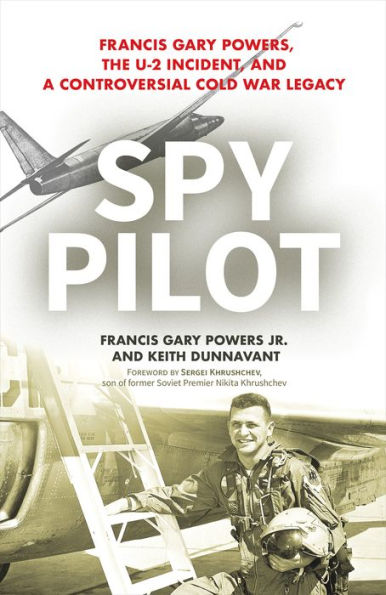
Spy Pilot – Francis Gary Powers Jr., Keith Dunnavant, and forword by Sergei Khrushchev

Well it’s Father’s Day 2019 and I’ve got some nice reads to honor dads everywhere for their love, strength, and courage. And for all the barbecue adventures, home improvement disasters, and those silly stories dads read us at bedtime to get us to fall the hell asleep, this is a small tribute. But dads in many a generation have also served our country with the same courage and dedication as they raised us but seldom talk about that part of their lives. Sometimes there’s sacrifice and silence and the hope of a quite and uneventful life after the service. Even in death, the subject of this review still had to defend his honor and reputation to the end, an endeavor his own son took up with great love.

For those of us old enough to remember the U-2 spy plane incident in 1960 in that American Air Force pilot working for a CIA secret project volunteers (Along with many other pilots) to conduct flyover missions of Soviet Russia. The race to find out the so-called Soviet bomber gap was on and it was decided that rather than make this a military operation that it would be run by civilian pilots. Enter the CIA.

Young Gary Powers found out his dear father had died in a helicopter crash live on television. The same television station he worked for flying traffic a traffic reporter with him. It was an ironic end for a man who had once gained the notoriety of hero, traitor, and myth. Gary Powers was 12 years old when he lost his father and he never imagined he would find out who his father really was. But that changed quickly.
This book is also a coming of age tale of a boy who grew up with great insecurities. But he eventually overcame them whereby the questions he had about his father’s military service would become his life’s work. Mainly because the mere mention of Francis Gary Powers would be cause for controversy. The more information the son learned about Power Sr. and the U-2 incident and how his father stirred up so many complex reactions. Not that the younger Powers did not know his father had been shot down flying over the Soviet Union, but in his own words, young Gary thought everybody’s dad had similar experiences.

Out of childhood heartbreak came Gary Jr.’s time in college and his sudden thrust into the spook circles his father once belonged to that changed him forever. While Gary Jr. was initially in search of his father’s Distinguished Flying Cross that went un-awarded for many years, but ended up going on a search for more information about the U-2 incident that left even more questions. He initially did not seek to avenge his father’s mistreatment (He really got a raw deal between the White House and the CIA) or to correct the history records and clear his name but that is exactly where the path would lead.
Gary would eventually come up with the idea that on the 30th anniversary of the U-2 incident, he could travel to Moscow. His visit proved a great therapy and comfort for him because it began to answer many questions about his father. A visit to the prison cell where his father spent almost two years was an eye opener and the catalyst for clearing his father’s name.
A letter sent to the service review board requesting the elder Powers be awarded the POW medal. Powers was also denied re-entry into the Air Force after he was released in accordance with his contract with Lockheed (And the CIA) and ended up working as a test pilot. Gary Jr. founded the Cold War Museum in the early 90s.
His efforts paid off and Gary Jr. secured the POW medal after an extensive review of declassified U-2 program documents plus the national defense medal, the distinguished flying cross and the CIA director’s medal. Seems like an all-American story of strife, desperation, and triumph. This is hardly the case. Gary Jr.’s ouvre encompasses declassified interrogation and the Soviet military court transcripts. Several chapters develop a wonderful family history of Powers Sr. growing up in Appalachia and his own father’s work as a coal miner. The Powers family ‘s sudden exposure to the media and world events following the U-2 crash that would add to the drama. The much-publicized military trial was broadcast during the early days of television and misinformation very common. Francis Gary Powers ended up serving almost two years in a Soviet prison until the prisoner exchange (The U.S. handed over famed Soviet spy Rufolf Abel which is the premise of the excellent movie Bridge of Spies with Tom Hanks). His troubles did not end there.

He didn’t get a ticket tape parade though back home in Virginia the townspeople for the most part were supportive of the downed pilot and put together a parade in his honor. A wonderful side story about Powers’s father Oliver writing a letter to Colonel Abel suggesting he could be exchanged for his son’s release from the USSR is truly a tale of fatherly love passed down for each generation. Did Powers fly at low altitude which got him shot down? Why didn’t he use the poison pin to commit suicide instead of being captured? Read this book. It will be very informative and even entertaining. The narrative flows like a movie and you’ll find yourself forced to finish this book in bed with the nightlight on because you can’t wait to see what happens in the morning. A very good read indeed. Happy Father’s Day.

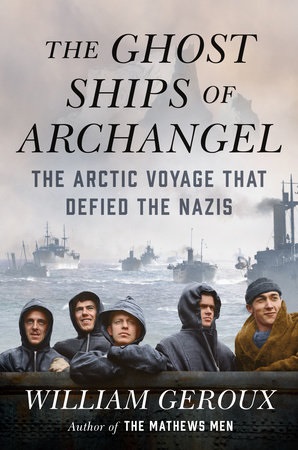
The Ghost Ships of Archangel – William Geroux

The Murmansk Run posed many dangers to re-supplying the Soviets while they fought off the German invasion of Russia. The British would either send supplies via the Mediterranean – but it was at least 13,000 miles – or take the Arctic bypassing the Northern tip of Nazi-occupied Norway. The elements alone added to the dangerous transit but U-boats, the Luftwaffe, and surface vessels made the journey even more challenging. After convoy PQ-17 broke off, losing its military escort, the skipper of the Troubadour thought better than to continue sailing on open waters with the Nazis in pursuit. Instead, he ordered the ship detour to the polar ice caps to hide and wait out the attacks. But as they approached the Polar north, the ship’s compass indicated they were anywhere and nowhere. The Troubadour became a ghost ship.

Geroux writes an chilling and terrifying tale for your summer reading consideration to wake up the senses. Following the great stories of courage and daring-do by the bravest men on earth as today marks the 75th anniversary of D-Day (I’m publishing on D-Day plus 1 because there’s no need to try and compete with it) other great stories of courage have gone unnoticed.

Soviets or Russians have a great interest in the Arctic Circle, but this isn’t a new development. Russia will always pursue rights to the Arctic due to being landlocked and because this is the fastest sea route for getting much needed supplies. It was the reality 75 years ago and it remains the motivation for Russia’s aggressive behavior today. History has a habit of replaying like a cancelled TV sitcom. Never again shall the people who ran logistics be kept in obscurity. This is a great and long overdue tribute to those who made all the other parts of the war function.

Will the Troubadour make it to Archangel to deliver much needed supplies to the Russians in time or will it succumb to Nazi aircraft? Worse yet the Arctic May offer some concealment from aerial attacks but for how long?

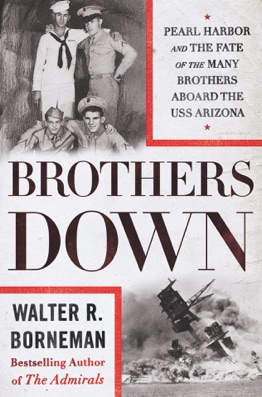
Brothers Down: Pearl Harbor and the Fate of the Many Brothers Aboard the USS Arizona

Walter R. Borneman

Many years after the Gulf War I recalled the night a group of reservists I was deployed with (Few of us were from the same unit but rather pieces being shipped out to existing units already on the ground), the debarkation process then the long road trip into Saudi Arabia. We arrived at night at the middle point of our journey in a gym building where men and women, all tired and fed up from the bus ride, took up a spot on the basketball court floor to sleep. The trip would have concluded by morning where we were all reporting to the main unit one hundred miles from the original front lines. This was a medical unit (Not going to name it here).

Poor leadership dictated that there was no need for anyone to write and mail letters to family because this thing would be over quick. Why that kind of thinking still prevails in some military minds (Remember my review of The Storm on our shores? The commander of the operation said they could take back Attu and Kiska from the Japanese in three days!) The lack of communications in the early days would prove to be a source of tension with families back home. Eventually mail was encouraged but still. Anyway, as we settled down to sleep the SCUD alert sounded and we donned gas masks and waited. The detonation was heard even in our location but none of us knew where it hit. This would be the first of many attacks on the ground of course but the converted warehouse where an Army reserve unit was staying got hit, killing 27. Back home many families wondered if one of those casualties was their loved one.

I had to explain two weeks later, when I was able to make a call home, that no, I didn’t get blown up that night. But cases of miscommunication causing confusion is not a new thing. The wait is just as agonizing for families, who hang on to treasured memories and artifacts left behind in the hopes of good news. After my parents died I had the task of going over my mother’s documents where I found old postcards I’ve sent from deployments overseas, in peacetime, if the cold war could be called that. Letters and pictures from far-away places and it was the 1980s and I was having a great time. Never described to her in my missives how the Soviets would follow our ship convoys and fly over low and how many of us looked back up and flipped them the bird. Good times. But I lived to be deployed again and still my folks probably worried and I always told them I was okay, because I was. But I was also happy to be gone on my adventures. After the 9/11 attacks and the beginning of the current conflict, many of us answered the call to serve again and many who grew up during that time eventually chose to serve as well. Again, this is not a new behavior but one that transcends time.

What about those who never came home? Today we see husbands deploying is not unusual and neither is a wife also deploying or serving in the same unit as their spouse. We have senior military personnel welcoming their sons or daughters into the service and sometimes serving in units close by. We’ve grown used to this but 75 years ago many young men joined the services to escape the great depression, the lack of jobs and poor economic outlook or problems back home. Before that, while the Great War to end all wars raged in Europe, the economy in the United States was strong. Young men were traveling to France to serve as ambulance drivers and in other functions to help in the war effort. There was some sense of duty more than economic. The same men and many women (Signing up to become nurses and drivers) volunteered to go back after the United States entered the war.

The service offered them a comradeship that they couldn’t experience anywhere else, other people who shared the same purpose and objectives and culture. In a way, you may often hear that serving in the military is much like a family, and it is. Where men back in the day missed the closeness of their parents, siblings, and sweethearts, they were still part of another family, and this alone brought them comfort. Not only are these deaths felt back home, but the military family itself also dies a little.

A new book published this week by Walter R. Borneman – Brothers Down reveals with great detail the great loss of brothers stationed together onboard one Navy ship, but it’s not the famed Sullivans. Borneman takes us to the year leading to the Pearl Harbor attack and the sinking of the USS Arizona. For some reason until now, the fact that the Arizona boasted 38 pairs of brothers had not been made public or at least as big a story as that of the Sullivan boys. One pair of brothers, Masten and Bill Ball, who were also from Iowa and had lived in Waterloo, Iowa were friends with the Sullivan family. Even after moving to Fredricksburg Iowa, the younger brother Bill was rumored to have had his eye on the only Sullivan daughter; Genevieve. The Balls had served in the Navy since the late 30s as the two older Sullivan brothers, George and Frank, whose own service had served as inspiration for the Balls to also join.

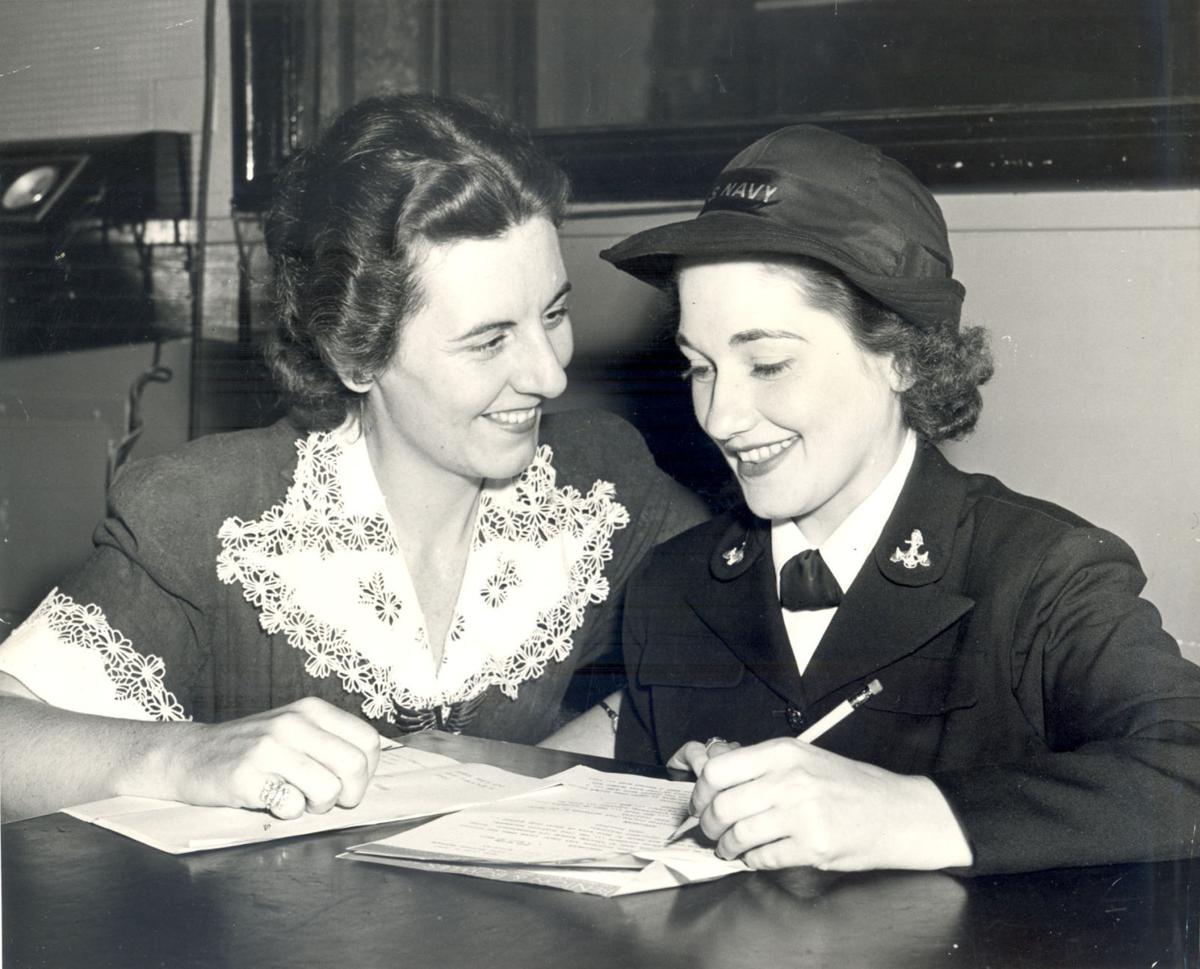
Genevieve joins the Navy

After Pearl Harbor, the remaining Sullivan brothers signed up for the Navy to avenge the death of Bill Ball (Masten survived the attack). Eventually all five Sullivan brothers wound up serving on the USS Juneau – which was sunk by a Japanese torpedo in 1943 – where they all perished during the battle of Guadalcanal. Genevieve, then the only surviving sibling, joined the Navy as a WAVE and served almost two years. She went on to marry and raise a family of her own and looked after her aggrieved parents but her life was never the same.

Borneman goes on to break down the lives and careers of each set of brothers serving on the Arizona. Of the 38 sets of brothers – 63 were killed on the Arizona December 7, 1941 were brothers which he explains was 80 percent of its crew. One set was actually a father – a veteran nearing retirement – and his son who had recently joined. The men who survived were mostly married and had stayed off the boats overnight and had not reported for duty on the morning of the attack. The description of the surviving sailors of their daring escape from death and their struggle to save their ships and rescue their shipmates is good storytelling, bringing to life the events of the day of infamy. Long ago I stood before the honor roll wall at the USS Arizona searching for names. I was a Corpsman myself, so I searched for the Pharmacist Mates names. We all look for something, a connection maybe. My visit was sobering and eerie at the same time but I was able to go to the memorial and glad I did. So many male bloodlines were lost in one day yet the policy curbing the practice of assigning family members to the same ships had not been enforced. Not even for the Sullivans.

This book is a tribute and account of the Pearl Harbor attack from the inside out and a perspective that should not be lost to the ravages of time. Lastly, the agonizing wait for the families in getting slow news of the attack. Were their loved ones killed in action or are they missing? The timing of this book is good. We must remember each life lost and honor them. Today is Memorial Day. Let’s remember the fallen and enjoy our lives as best we can.